
Wig Topper vs Full Wig: Which Fits Best?
- wigsbyjolie
- 1 day ago
- 6 min read

If you have ever stood in front of the mirror wondering whether you need more volume at the crown or a complete transformation, the wig topper vs full wig question is usually where the real decision begins. Both can be beautiful, natural-looking solutions. The right choice depends less on trend and more on coverage needs, lifestyle, comfort, and how you want to feel wearing it.
For many women, this is not simply a beauty purchase. It is a personal decision tied to confidence, privacy, and the desire to look polished without looking "done." That is why the difference between a topper and a full wig deserves a clear, thoughtful explanation.
Wig topper vs full wig: the core difference
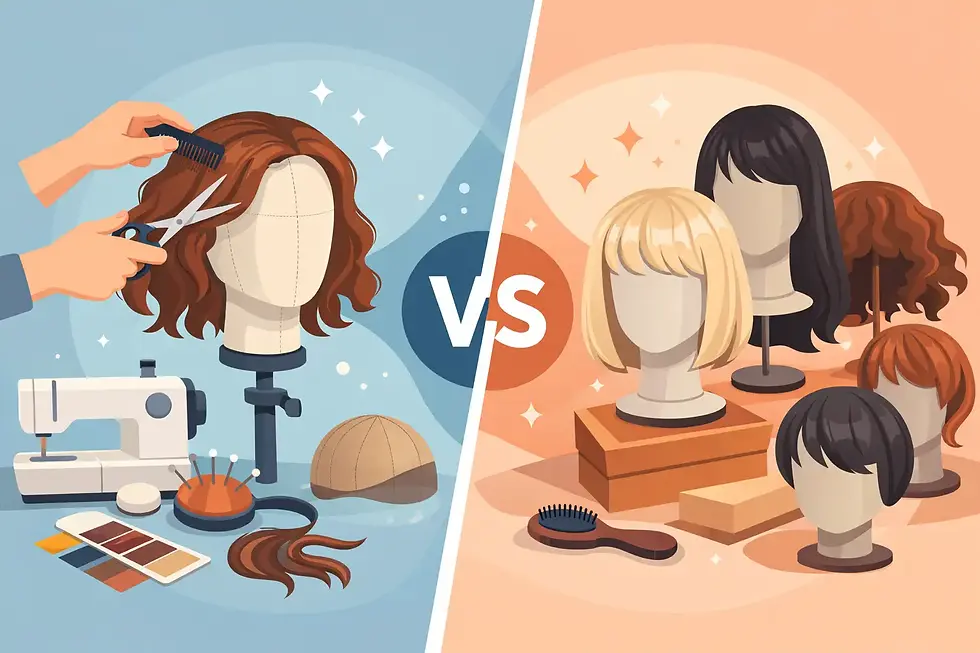
A wig topper is designed to blend with your biological hair. It clips or secures into the hair you still have and adds coverage where density has become limited, most often at the crown, part line, or top of the head. A full wig, by contrast, covers the entire head and creates a complete hairstyle from root to ends.
That distinction sounds simple, but it changes everything. A topper relies on your own perimeter hair for integration. A full wig does not. If you still have enough hair around the sides, front, or back to create a believable blend, a topper can look remarkably natural and feel very lightweight. If your thinning is more advanced, more diffuse, or less predictable, a full wig often offers a more refined and dependable result.
When a wig topper is the better choice
A topper tends to be ideal for women with fine hair or early to moderate thinning concentrated at the top. If your front hairline still feels workable and your sides retain enough density, a topper can restore fullness without replacing your entire look.
There is a certain elegance to this option because it enhances rather than reinvents. Your stylist can match the color, density, and movement to your existing hair so the result feels like the best version of your own hair. For clients who want discretion, this matters. Friends may notice that you look fresher or more polished, but they may not immediately identify why.
Comfort is another advantage. Because a topper covers less surface area, it often feels cooler and lighter for daily wear, especially in warm climates like South Florida. It can also be easier for women who are not emotionally ready for a full wig. A topper offers support without requiring a complete shift in routine or identity.
That said, toppers do come with conditions. They need enough anchor hair for secure attachment, and the blend has to be done well. If your density changes over time, the same topper may not perform as beautifully six months from now as it did on day one.
The trade-offs of a topper
The most common misconception is that a topper is always easier. In reality, it can be more particular. The piece must be placed correctly, your own hair must cooperate, and the texture match has to be intentional. Humidity, growth pattern, and haircut all influence the final result.
A topper also does not solve every type of hair loss. If thinning extends through the sides or nape, or if the scalp is highly visible across a larger area, a topper may start to look like a compromise rather than a solution.
When a full wig makes more sense
A full wig is often the stronger option when coverage needs are broader or when you want consistency without relying on your natural hair to complete the style. It creates a finished look in one piece, which can be liberating for women experiencing more extensive thinning, medical hair loss, or ongoing changes in density.
For many clients, a full wig brings a different kind of confidence. Instead of negotiating with sparse areas each morning, they start with a complete silhouette. The shape is already there. The fullness is already there. The style can be refined, customized, and polished with far less dependence on what your natural hair is doing underneath.
This is also why full wigs are often the better choice for women who want a signature look every day. If your goal is a smooth bob, soft layers, editorial volume, or a highly controlled finish, a full wig offers a cleaner foundation. It allows artistry in every strand because the entire look is designed as one cohesive style.
The trade-offs of a full wig
A full wig offers more coverage, but it can feel like a larger commitment at first. Proper fit is everything. A beautiful wig that is too loose, too dense, or poorly proportioned will never feel luxurious. It will feel distracting.
There is also a learning curve. Placement, securing methods, and styling maintenance matter. The good news is that once a wig is customized correctly, many women find it easier than managing a partial solution. The initial adjustment is greater, but the day-to-day experience can become surprisingly effortless.
Coverage, realism, and daily wear
When clients compare a wig topper vs full wig, they often focus on appearance first. That makes sense, but realism is not only about the hair fiber or cap construction. It is about whether the piece suits your specific pattern of hair loss and your daily routine.
A topper usually looks most realistic when there is enough healthy-looking hair around it to support the illusion. If that blend zone is strong, the result can be exceptionally believable. A full wig tends to look most realistic when it has been properly fitted, cut, and styled to complement your face shape, lifestyle, and personal aesthetic.
Daily wear changes the conversation too. If you need something you can put on with minimal fuss before work, school drop-off, meetings, or social events, convenience matters as much as beauty. Some women love the lightness of a topper and do not mind a few extra blending steps. Others prefer the all-in-one ease of a full wig because it eliminates the uncertainty of how their natural hair will behave that day.
How to choose between a wig topper and full wig
The best choice usually comes down to three questions. How much coverage do you truly need? How much natural hair do you want to use in the final style? And how much daily styling are you comfortable doing?
If your thinning is focused mainly on the top and you still enjoy working with your own hair, a topper may be the more graceful answer. If your hair loss is more advanced, more visible, or simply more stressful to manage, a full wig may give you a cleaner, more confidence-restoring result.
This is where a professional assessment becomes invaluable. Many women assume they need less coverage than they actually do because a topper feels less intimidating. Others move straight to a full wig when a beautifully crafted topper would have given them exactly what they wanted. The most flattering option is not the one with the most hair. It is the one that looks balanced, believable, and effortless on you.
Fit matters more than category
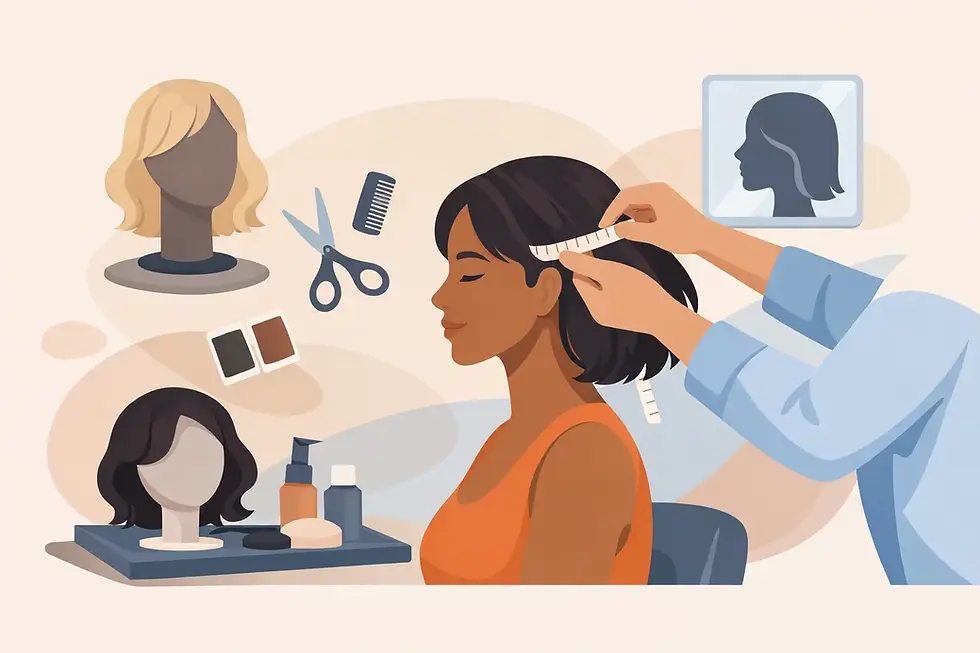
A poorly fitted topper can look obvious. A poorly fitted full wig can feel even worse. The category alone does not determine whether a piece will look natural or luxurious. Fit, density, hairline design, color placement, and styling refinement are what elevate the result.
That is why boutique-level guidance matters so much. In a private fitting environment, details that seem small on paper become clear in person - where your part naturally sits, how much density your face can carry, whether you need soft movement or more structure, and how the piece performs in real light. Wigs by Jolie approaches this process as craftsmanship, not guesswork, because the goal is never just more hair. It is a result that feels polished, personal, and truly wearable.
The emotional side of the decision
There is also a quieter part of this conversation that should not be overlooked. Some women choose a topper because they want to preserve a sense of continuity with their own hair. Others choose a full wig because they are tired of trying to make thinning hair behave like it has not changed.
Neither choice is more valid. They simply reflect different needs. The right piece should not make you feel self-conscious, overstyled, or burdened. It should make getting ready feel possible again - and even pleasurable.
If you are deciding between the two, give yourself permission to choose based on what serves you now, not what seems less dramatic on paper. The most beautiful result is the one that lets you move through your life with ease, elegance, and the quiet confidence of knowing your hair finally feels like yours again.

Comments